















Comprehensive Analysis of Hyundai Radiator Support Compatibility
 Jun 06, 2025|
 View:2599
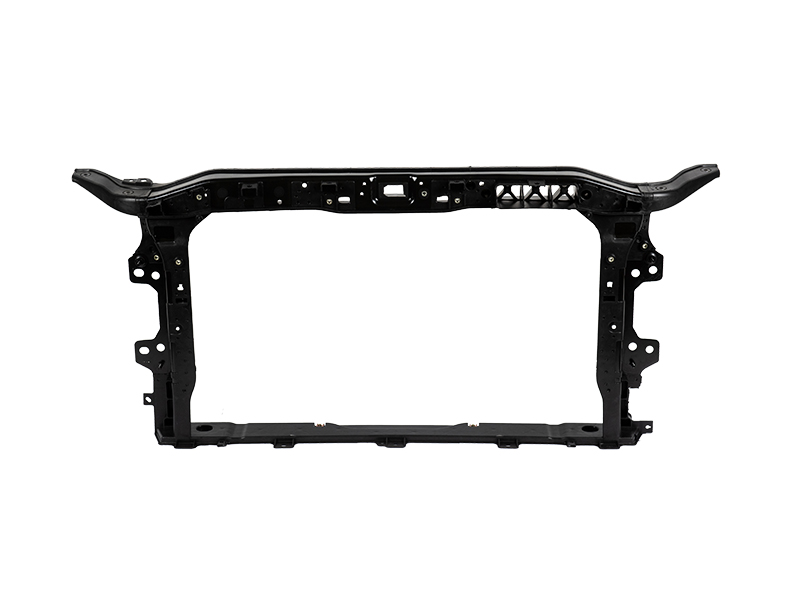
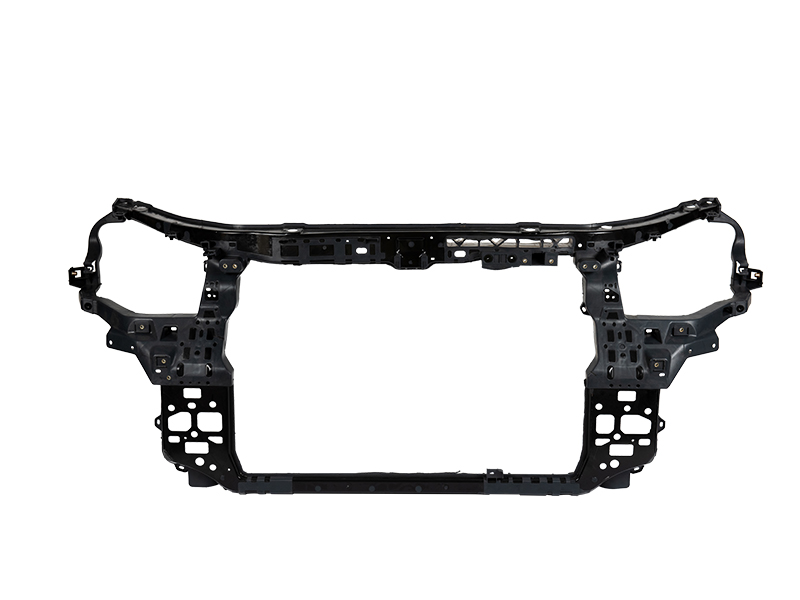
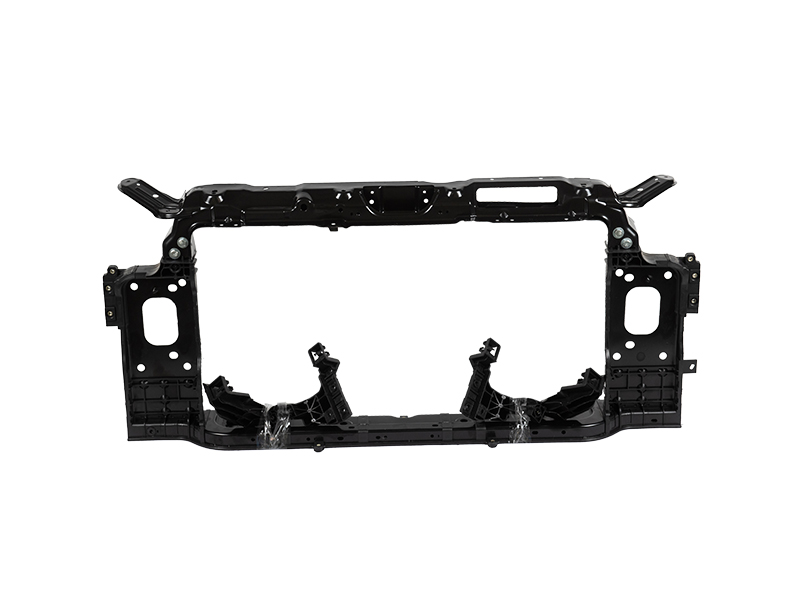
When repairing or replacing the front cooling system of a Hyundai vehicle, the Hyundai Radiator Support is a critical structural component. It serves not only as the mounting base for parts such as the radiator, condenser, but also as an essential part of the front body structure. However, many car owners and repair technicians face a common problem: Why do radiator supports from different Hyundai models look similar but are not interchangeable? Understanding Hyundai Radiator Support compatibility across different models is key to ensuring repair quality, vehicle safety, and saving time and costs. This article will clarify the core factors affecting compatibility to help you select the right parts accurately.

Core Functions of Radiator Support and Why Compatibility Matters
Core Functions
Support and Fixing: Provides stable mounting points for the radiator, condenser, cooling fan, and other components.
Structural Connection: Connects the front bumper frame, headlight brackets, front fender liners, etc., forming a rigid frame for the front of the vehicle.
Collision Energy Absorption (in some designs): In minor collisions, specifically designed Hyundai Radiator Supports can absorb energy and deform to protect core components behind them.
Consequences of Incompatibility
Installation Failure: Mismatched screw holes, fixing clips, overall shape, or size make installation impossible.
Component Interference: After installation, the radiator, fan, pipes, or wiring harnesses may be improperly positioned, causing friction, extrusion, or disconnection.
Front Component Misalignment: Affects the installation accuracy and gap uniformity of exterior components such as the front bumper, headlights, hood, and fenders.
Safety Hazards: Inadequate structural strength or unstable connections may cause components to fall off or lead to more severe damage during driving or collisions.
Key Determinants of Hyundai Radiator Support Compatibility
Vehicle Platform
Hyundai develops models using different global platforms (such as the K platform, N platform, i-GMP platform, etc.). The chassis structures and front body designs of different platforms vary fundamentally, directly determining the shape, size, and mounting point layout of the Hyundai Radiator Support. For example, the Elantra and Sonata typically belong to different platforms.
Specific Model and Production Year
Different Generations of the Same Model: For example, the Hyundai Radiator Support designs for the 6th-generation Elantra (2016–2020) and the 7th-generation Elantra (2021–present) are usually completely different.
Mid-Cycle Facelifts: Even within the same generation, minor adjustments to the front styling or structure during a facelift may lead to changes in the radiator support.
Different Body Styles: Slight differences in front structures may exist between sedan, hatchback, and wagon versions of the same-generation model.
Engine Type
Different engine displacements or types (e.g., 1.6L Gamma, 2.0L Nu, 1.6T Gamma T-GDI, hybrid/electric models) may require:
Radiators and condensers of different sizes.
Different numbers and layouts of cooling fans.
Varied front air intake requirements.
These differences may necessitate specific mounting points or cutout designs for the Hyundai Radiator Support.
Market Specifications and Options
Models sold in different countries or regions (e.g., North America, Europe, Asia) may have subtle design differences in radiator supports (such as fixing holes or brackets) due to regulatory or configuration variations (e.g., whether front fog lights, specific radar/sensors, or engine underguards are installed).
How to Accurately Identify the Required Hyundai Radiator Support
Vehicle Identification Number (VIN)
The VIN is a unique "identity card" for a vehicle, containing key information such as the manufacturing plant, model year, model code, engine code, and production serial number.
Professional parts suppliers or Hyundai dealerships can input the complete VIN into an electronic catalog system to precisely match the Hyundai Radiator Support part number designed for the vehicle.
Essential Reference Information
Exact Model Name: e.g., Elantra, Tucson, Santa Fe, Sonata, Kona.
Specific Model Year: Specify the year precisely (e.g., 2020 model, 2021 model) rather than using vague ranges.
Engine Displacement and Code: e.g., 2.0L MPI, 1.6T GDI. Engine model codes are usually found on a plate in the engine compartment or in the vehicle manual.
Body Style: e.g., sedan, hatchback, SUV.
Old Part Number (if available): The old support often has a part number engraved or labeled on it, which is the most direct reference (note that the old part may have been replaced with a non-OEM part).
Model Compatibility Charts (Use with Caution)
Some parts suppliers provide general model compatibility lists, which can serve as preliminary references but should never be the sole basis for purchasing.
Always verify whether the list includes your vehicle's exact year, engine, and trim model, as the same model name with different years or engines is often incompatible.
Example References (always verify with VIN or supplier data):
- Hyundai Radiator Support for 2017–2020 Hyundai Elantra (1.6L / 2.0L Gasoline)
- Hyundai Radiator Support for 2021–present Hyundai Elantra (2.0L Gasoline)
- Hyundai Radiator Support for 2016–2018 Hyundai Tucson (1.6T Gasoline)
- Hyundai Radiator Support for 2019–2023 Hyundai Tucson (2.0L / 2.4L Gasoline)
Purchasing and Installation Tips
Prioritize Quality
The Hyundai Radiator Support is a critical structural and safety component. Always choose products made from high-quality steel, with excellent stamping and welding craftsmanship, proper anti-corrosion treatment (such as electrophoresis), and high dimensional accuracy. Poor-quality supports have insufficient strength, are prone to deformation and corrosion, and pose safety hazards.
Ensure Exact Match
Again, use the VIN or all precise vehicle information (year + model + engine + body style) to confirm compatibility. Do not rely on "close enough" or visual similarity.
Professional Installation Recommended
Replacing the radiator support typically involves disassembling the front bumper, headlights, condenser, radiator, and other components, and requires precise positioning of the front body structure. It is recommended to have an experienced repair technician handle the installation to ensure all components are correctly reset, screws are tightened to standard torque, and front body dimensions meet specifications.
Inspect Associated Parts
When replacing the radiator support, take the opportunity to inspect related components such as the radiator, condenser, fan, pipes, front wiring harnesses, fender liners, and front crossmember. If any damage or wear is found, consider replacing or repairing them simultaneously.
Choose a Reliable, Perfectly Compatible Support for Your Hyundai
Understanding Hyundai Radiator Support compatibility is not a trivial matter—it directly affects repair success, vehicle performance restoration, and driving safety. Precise matching stems from a deep understanding of vehicle platforms, model years, engine configurations, and market differences.
As a professional radiator support supplier, DINGHAO specializes in providing high-quality, perfectly matched Hyundai radiator support solutions. We understand the complexity of support compatibility across different Hyundai models and have established a comprehensive parts database based on VIN and precise vehicle information. DINGHAO's Hyundai Radiator Supports are manufactured to strict OEM specifications using high-quality materials and advanced processes, ensuring accurate dimensions, reliable strength, and durable anti-corrosion performance to provide a solid foundation for your vehicle's front-end structure.
When you need to replace the radiator support for your Hyundai, choosing DINGHAO means choosing precise compatibility and reliable quality. We are committed to providing you with the best-matched parts to ensure efficient and safe repair experiences. Contact DINGHAO today to get precise parts support based on your vehicle's VIN or detailed information!