











What Does A Radiator Support Do?
 Feb 21, 2025|
 View:1888
Today, with the rapid development of the automotive industry, the enhancement of engine performance and the lightweight design of vehicles have put forward higher requirements for the cooling system. As the core supporting component of the cooling system, the role of the radiator support is far more than just "fixing the radiator". This article will deeply explore the core value of this component from the aspects of technical principles, safety protection, maintenance economy, and future trends, helping car owners, maintenance practitioners, and auto parts sellers to comprehensively understand its importance.
1.Technical Principles: The "Skeletal Structure" of the Cooling System
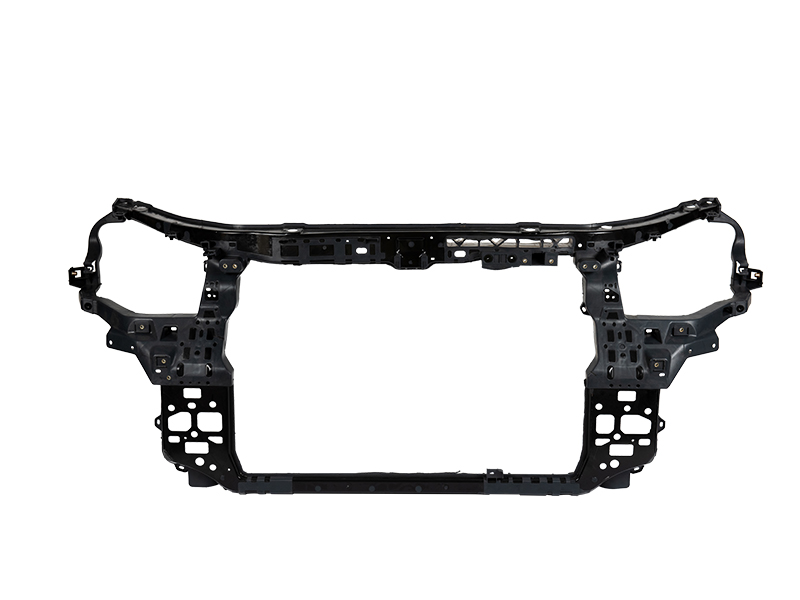
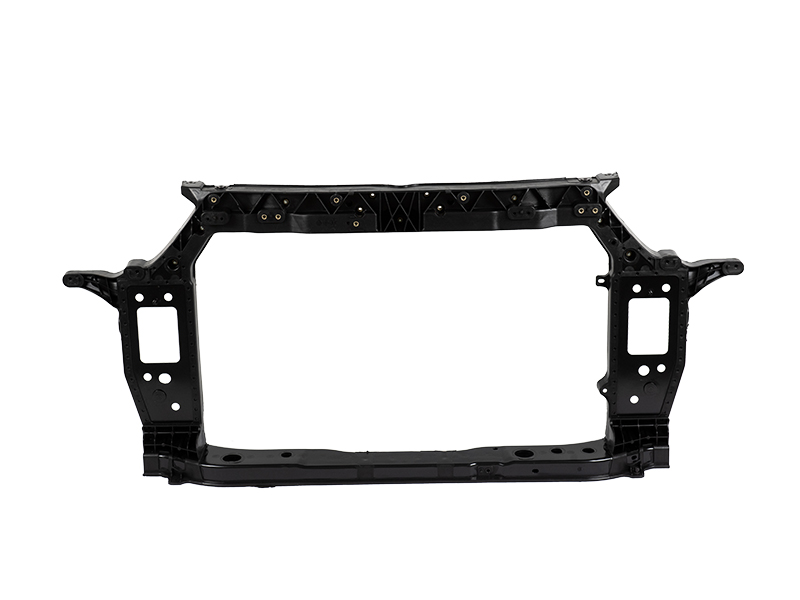
The radiator support is located at the front of the vehicle and is usually made of high-rigidity steel, aluminum alloy, or composite materials. Its structural design directly affects the cooling efficiency and the stability of the front of the vehicle. Its core functions include:
Fixing Key Components: Components such as the radiator, condenser, and fan need to be accurately positioned through the support to avoid the loosening of pipelines or the deformation of radiator fins caused by vibrations.
Optimizing Aerodynamics: The hollow structure and the design of the air guide grooves of the support can guide the air flow to efficiently pass through the core of the radiator, reducing wind resistance and improving the cooling efficiency at the same time.
Dispersing Mechanical Stress: The vibrations in the engine compartment and the impacts from the road surface are transmitted to the longitudinal beams of the vehicle frame through the support, avoiding metal fatigue caused by local stress concentration.
Taking the US market as an example, the latest data in 2025 shows that more than 60% of vehicle models adopt a modular radiator support design. Quick disassembly and assembly can be achieved through bolt connections, which not only reduces the manufacturing cost but also improves the convenience of maintenance.

2.Safety Protection: The "First Line of Defense" in Accidents
In a vehicle collision, the radiator support undertakes the dual responsibilities of energy absorption and protection:
Collision Energy Absorption: When a frontal collision occurs, the support absorbs part of the impact force through controlled deformation, reducing the direct damage to the core components in the engine compartment.
Passenger Compartment Protection: The support forms a linkage structure with the longitudinal beams at the front of the vehicle and the firewall to prevent components such as the radiator from intruding into the cab during an accident and ensure the safety of passengers.
It is worth noting that the "repairability" of the radiator support makes it a key component in the repair of accident vehicles. For example, when the support is deformed due to a minor collision, it can be repaired through professional sheet metal processing techniques; in case of severe damage, it is recommended to replace it directly to avoid affecting the subsequent driving safety due to insufficient strength.
3. Maintenance Economy: The "Invisible Investment" with Low Cost and High Return
Reducing Maintenance Costs
Compared with non-replaceable components such as the longitudinal beams of the vehicle frame, the independent design of the radiator support greatly reduces the maintenance threshold. According to industry statistics, the cost of replacing the original radiator support is only 1/5 to 1/3 of the repair cost of the entire vehicle frame, and there is no need to use large stretching equipment.
Extending the Vehicle's Service Life
A rusted or aged support may cause the radiator to shift, leading to coolant leakage or engine overheating. Regularly checking the condition of the support (especially for vehicles in high-humidity areas) and replacing the damaged components in a timely manner can avoid major failures caused by the accumulation of minor problems.
4. Market Trends: The Dual Upgrades of Quality and Technology
The data of the global auto parts market in 2025 shows that the annual growth rate of the replacement demand for radiator supports is 8.3%. The driving factors behind it include:
Material Innovation: The proportion of galvanized steel sheets is decreasing, and the application proportion of lightweight aluminum alloys and carbon fiber composite materials has increased to 35%.
Intelligent Integration: Some high-end vehicle models have sensors built into the support, which can monitor the pressure and displacement of the radiator in real-time and give early warnings of failures.
Environmental Protection Requirements: The utilization rate of recyclable materials has increased, and some manufacturers have launched a "trade-in" recycling program to reduce resource waste.
For auto parts sellers, providing radiator supports that are suitable for multiple vehicle models, have anti-rust coatings, and have passed safety certifications will be the key to seizing the market.
5. Purchase and Maintenance Guide
Purchase Suggestions
Match the Original Specifications: The installation hole positions and inclination angles of the supports of different vehicle models vary significantly, and the part numbers need to be strictly checked.
Material Priority: For daily use vehicles, galvanized steel can be selected. For performance vehicles or in high-corrosion environments, aluminum alloys or composite materials are recommended.
Certification Standards: Give priority to products that have passed the ISO 9001 or IATF 16949 certification.
Maintenance Key Points
Regular Inspection: Every 20,000 kilometers or after experiencing a collision, check whether the welding points of the support are cracked and whether the surface is rusted.
Cleaning and Maintenance: Use a soft brush to remove the sediment and insect remains between the radiator and the support to avoid blocking the air flow channel.
Replacement Timing: If the deformation of the support exceeds 3mm or there are structural cracks, it needs to be replaced immediately.
Conclusion
As the "unsung hero" of the automotive cooling system, the technical content and market value of the radiator support are constantly increasing with the upgrading of the automotive industry. From ensuring the cooling efficiency to improving the collision safety, from reducing the maintenance cost to promoting environmental protection innovation, this component always plays a key role in the vehicle's life cycle. For car owners, understanding its functions and paying attention to daily maintenance are effective means to avoid engine overheating and extend the vehicle's service life; for industry practitioners, grasping the trends of material upgrades and intelligence is the key to winning in future competition.