









How do I know if my radiator support is bad?
 Feb 07, 2025|
 View:3168
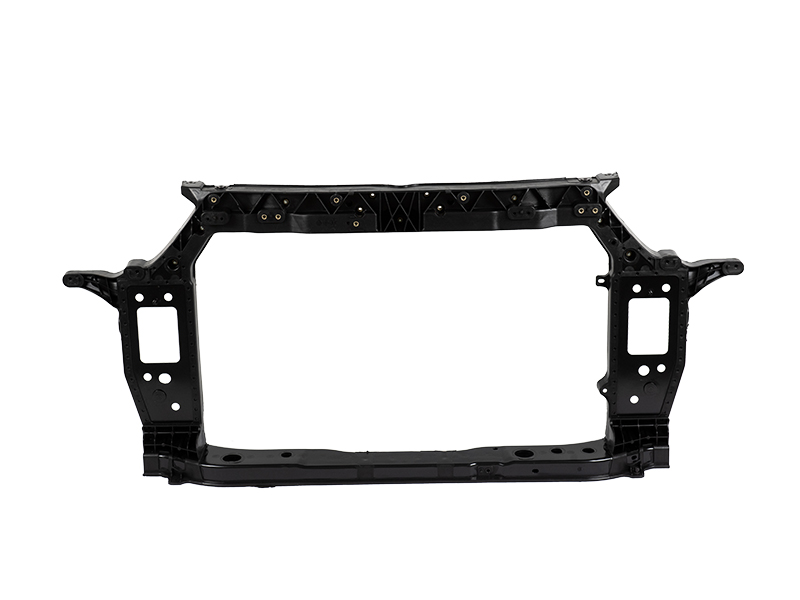
With the continuous advancement of automotive technology, the cooling system plays an increasingly important role in vehicle stability and safety. As a core component connecting the radiator to the vehicle body frame, the radiator support not only supports key components such as the radiator and condenser but also functions as an energyabsorbing and buffering element in the event of a collision. However, for vehicle owners, longterm use or accidental impacts may cause the radiator support to age and deform, leading to a decline in cooling efficiency, abnormal noises in the front of the vehicle, and even potential safety hazards. So, How do I know if my radiator support is bad? This article will provide a comprehensive answer for you, from symptom identification, inspection methods to repair suggestions.

Four Warning Signs of a Damaged Radiator Support
Misalignment of Frontend Components or Abnormal Gaps
If the radiator support is deformed or broken, the most obvious manifestation is the misalignment of the installation positions of the frontend components:
Tilted Radiator: Open the hood and check if the radiator is fixed horizontally. If it is significantly skewed or in contact and friction with surrounding components (such as the fan, bumper), it may be caused by the deformation of the support.
Uneven Gap between Headlights and Front Bumper: The damage to the support will disrupt the overall structure of the front of the vehicle, resulting in an asymmetrical gap between the headlights and the bumper.
Difficulty in Opening and Closing the Hood: The damaged support may shift the position of the hood latch, making it necessary to try several times to close the hood.
Decline in Cooling Efficiency and Abnormal Water Temperature
The deformation of the radiator support can squeeze the radiator pipes or block the air circulation, directly affecting the cooling performance:
Frequent Water Temperature Alarms: If the water temperature gauge continuously shows a high temperature (close to the red area), check whether the support is pressing on the radiator or causing coolant leakage.
Weakened Airconditioning Cooling Effect: The deformation of the radiator support may also affect the working efficiency of the condenser, resulting in an increase in the temperature of the air blown out by the airconditioner.
Abnormal Operation of the Cooling Fan: The displacement of the support may make the distance between the fan and the radiator too close or too far, triggering the fan to operate at a continuous high speed or stop rotating.
Abnormal Noises and Vibrations during Driving
When the radiator support suffers from structural damage due to corrosion or impact, the vehicle's dynamic performance will give the following warnings:
Abnormal Noises on Bumpy Roads: After the metal of the support fatigues or the welding points crack, a "creaking" sound or metal impact sound will be heard from the front of the vehicle when driving on bumpy roads.
Frontend Resonance during Acceleration: During rapid acceleration, if the support cannot stably support the radiator components, it may cause highfrequency vibrations that are transmitted to the steering wheel.
Significantly Increased Wind Noise at High Speeds: The deformation of the support may cause the front bumper or grille to be poorly sealed, increasing the wind resistance coefficient and generating a whistling sound.
Hidden Damage after Accident Repair
If your vehicle has experienced a frontend collision, even if the appearance has been repaired, there may still be potential hazards in the radiator support:
Sheet Metal Repair Marks: Check whether there are cutting and welding marks on the surface of the support. Nonfactory repairs may reduce its structural strength.
Damaged Antirust Coating: If the antirust layer is not resprayed after the accident, the metal support is vulnerable to rainwater erosion and starts to rust from the inside.
Failure to Pass Safety Tests: The damaged support may not pass the secondary collision test, endangering the safety of passengers.
How to Accurately Check the Condition of the Radiator Support?
Visual Inspection and Dimension Measurement
Rust and Cracks: Use a flashlight to carefully check whether there are rust spots, cracks, or detached welding points on the surface of the radiator support.
Compare with Factory Data: Measure the key installation hole distances of the support (such as the distance between the radiator fixing bolts). If the deviation from the standard value in the repair manual exceeds 3mm, it needs to be replaced.
Functional Linkage Tests
Radiator Stability Test: Gently shake the radiator with both hands. If the displacement amplitude exceeds 5mm, it indicates that the fixing ability of the support is insufficient.
Dynamic Load Simulation: Start the engine and gently step on the accelerator to observe whether the radiator and the support have abnormal displacements due to vibration.
Professional Equipment Diagnosis
Threedimensional Positioning Instrument Detection: Use a vehicle body alignment instrument to measure whether the installation position of the support conforms to the factory parameters. The accuracy error should be less than 1.5mm.
Ultrasonic Flaw Detection: Detect whether there are microcracks or rustinduced cavities inside the support that are invisible to the naked eye.
Repair or Replace? Solutions for the Radiator Support
If it is confirmed that the radiator support is damaged, a treatment plan needs to be selected according to the degree of damage:
Minor Deformation Repair: For supports with local bending or a rusted area less than 30%, their functions can be restored through hydraulic correction and antirust coating.
Severe Damage Replacement: If the main structure of the support is cracked or the repair cost exceeds 70% of the cost of a new part, it is recommended to directly replace it with an originalspecification part to ensure the safety performance of the cooling system and the vehicle body.
Conclusion: Protect the Core of the Front of the Vehicle and Choose Reliable Parts
How do I know if my radiator support is bad? By observing abnormalities in the front of the vehicle, testing the cooling performance, and combining professional inspections, vehicle owners can identify potential hazards in a timely manner. Whether it is for daily maintenance or accident repair, choosing a highquality radiator support is of great importance.
DINGHAO, a benchmark brand in the automotive parts field, its radiator support is made of galvanized steel plates and uses robotic welding technology, and 100% passes the compression and corrosion resistance tests. With precise originalfactory holeposition matching and a 5year quality guarantee commitment, DINGHAO will provide the most solid support for your vehiclemaking every journey safe and worryfree.