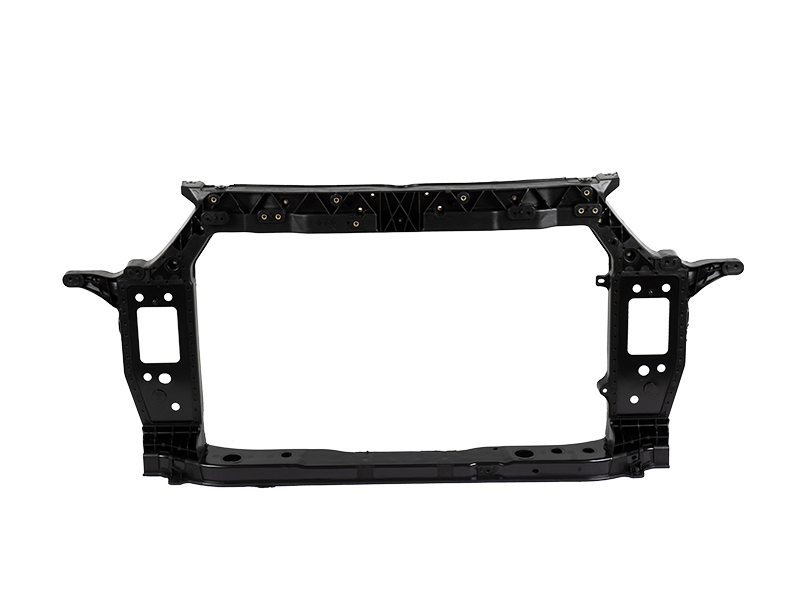
How important is a radiator support?
 May 20, 2026|
 View:17
In today's automotive industry, every component is designed to make driving safer and more comfortable—and the radiator support is no exception. From a simple support structure to today's sophisticated part with multiple integrated functions, the component has evolved as the automotive industry keeps pursuing higher performance and reliability. This guide explains just how important this front-end component really is.
Holds the radiator firmly in place, preventing shift, shake, and damage during driving
Connects with the bumper and body frame to strengthen the vehicle's front structure
Disperses impact energy in collisions, helping protect the radiator and surrounding parts
Guides airflow over the radiator surface for more efficient engine cooling
Maintains cooling performance on smooth roads, stop-and-go traffic, and rough terrain alike
When damaged, it affects engine cooling, bumper alignment, and overall front-end stability
Key Takeaways
A radiator support is the structural frame at the front of a vehicle that holds the radiator in position and ties together the bumper, hood latch, and body panels.
Its basic job is stabilizing the radiator so the cooling system keeps the engine at a safe operating temperature.
The radiator support contributes to crash safety by absorbing and dispersing impact energy away from critical components.
Well-designed supports also guide airflow, improving radiator efficiency and helping reduce fuel consumption.
The component must be strong enough for rough-road vibration yet precisely shaped to fit one vehicle model.
Common damage signs include coolant leaks, misaligned bumpers, hood gaps, and rust or cracks at the mounting points.
A damaged front-end frame should be inspected and replaced promptly; most are replaced after front-end collisions.
When buying a replacement, match the exact vehicle model, check material and coating quality, and confirm fitment data.
What Is a Radiator Support?
A radiator support—sometimes called a radiator core support or radiator panel—is a structural frame located at the front of the vehicle, directly in front of the engine. It holds the radiator and cooling fans in place, supports the hood latch, and connects the bumper and fenders to the main body structure. Most of these frames are made of formed steel sheet metal; some newer designs use aluminum or plastic composites for weight saving. Because it sits at the front of the car, this component is one of the first parts affected in front-end collisions.
Note: Although it looks like a simple bracket, the part is a structural component. Its shape, material, and mounting points are engineered for each vehicle model, which is why replacement parts must match the exact application.
The Basic Support Function of the Radiator Support
The primary function of the radiator support is to provide stable support for the radiator. The automotive radiator is responsible for dissipating the heat generated by the engine, ensuring that the engine operates at an appropriate temperature. It works like a solid cornerstone, firmly fixing the radiator in a specific position of the vehicle.
Take the Hyundai xcent radiator support as an example. It is precisely designed and manufactured to fit the shape and size of the radiator of the Hyundai Xcent model, providing reliable support and preventing the radiator from shifting, shaking, or even getting damaged due to bumps and vibrations during the vehicle's operation. If this support function fails, the radiator may become loose, affecting the normal circulation of the coolant, resulting in poor engine cooling and, in severe cases, even triggering engine failures.

Contribution to the Overall Structural Stability of the Vehicle
In addition to supporting the radiator, the front-end frame also plays an indispensable role in maintaining the overall structural stability of the vehicle. It is interconnected with other vehicle components, such as the bumper and the body frame, forming an organic whole. In case of accidents such as collisions, the radiator support can disperse the impact force, avoiding the concentrated impact on the radiator or other critical components, thus reducing the degree of vehicle damage.
In some high-intensity crash tests, it can be clearly seen how the frame effectively absorbs and disperses energy, protecting the radiator and surrounding important components, ensuring that the vehicle can still maintain a certain degree of structural integrity in extreme situations and providing strong protection for the safety of vehicle occupants. Structural crash performance is a central concern of vehicle safety regulation; national safety authorities such as NHTSA conduct frontal crash testing and require that front structures—including components like the radiator support—behave predictably in collisions.
Note: After any front-end collision, even a seemingly minor one, the front-end frame should be inspected. Bent or cracked supports that still "look fine" can compromise both cooling and crash performance in the next impact.
Optimization of the Cooling System Performance
Well-designed front-end frames help optimize the performance of the cooling system. They guide the airflow generated during the vehicle's movement, enabling it to flow more effectively over the surface of the radiator, and enhancing the heat dissipation effect. A reasonably designed radiator support can prevent the occurrence of turbulent flow or dead zones in the air flow, allowing the cold air to exchange heat with the radiator to the maximum extent, thereby improving the heat dissipation efficiency.
For example, some high-performance models use supports with unique air-guiding grooves and grille structures, which can accurately control the airflow direction, ensuring that the radiator is always in the best heat-dissipation environment. This is of great significance for maintaining the stable operation of the engine, improving the vehicle's power performance, and reducing fuel consumption.
Key Role in Different Road Conditions
Whether on flat urban roads or bumpy rural paths, the front-end frame shoulders an important mission. In the stop-and-go traffic conditions in the city, the engine is prone to generating excessive heat. At this time, a stable and reliable frame can ensure the normal operation of the radiator, dissipating the excess heat promptly and preventing the engine from overheating.
The vehicle will be subject to greater vibrations and impacts on bumpy rural roads. The frame must have sufficient strength and toughness to ensure that severe vibrations do not damage the radiator. Model-specific parts such as the Hyundai Xcent front-end frame are designed for different road conditions—whether dealing with urban congestion or complex rural roads, they provide stable support for the radiator and ensure the normal operation of the vehicle.
Signs of a Failing Radiator Support
Because this frame is a structural part, damage shows up in several noticeable ways. Catching these signs early prevents more expensive repairs:
| Symptom | Likely Cause | What to Do |
|---|---|---|
| Coolant leak around the radiator area | Radiator shifted or cracked after support failure | Inspect support and radiator; replace as needed |
| Misaligned bumper or uneven panel gaps | Bent front-end frame after a front impact | Straighten or replace the support |
| Hood sits crooked or latch misaligned | Support mounting points deformed | Check alignment; replace if damaged |
| Rust, cracks, or broken welds on the frame | Age, salt exposure, or corrosion | Repair or replace with a corrosion-protected part |
| Radiator shakes or vibrates at speed | Loose or worn mounting points | Tighten mounts; replace support if worn |
| Engine runs hot more often | Airflow blocked by a deformed support or loose shroud | Restore cooling path; repair support damage |
These frames are commonly replaced after front-end collisions because structural integrity is hard to verify by eye. If in doubt, have the front-end inspected by a qualified technician. Related reading: symptoms of a faulty Hyundai Xcent radiator support, how to tell if your radiator support is bad, and the impact of a damaged 71410-TBA-A01 front-end frame on engine cooling.
Replacement and Installation
Why Replacement Is Common
Replacing this frame is one of the most frequent body repairs in the aftermarket. Front-end collisions, curb impacts, and corrosion are the three main causes. Because it carries the radiator, hood latch, and bumper loads, a slightly bent frame is rarely worth straightening; welding a deformed support back into shape can weaken it and compromise future crash performance. Most repair shops therefore replace the part rather than repair it.
What the Job Involves
A typical job involves removing the bumper, grille, and sometimes the cooling fans, then unbolting the old frame, transferring parts such as rubber mounts and brackets, and installing the new support before aligning the hood and bumper. Total labor depends on the vehicle model and how many surrounding parts must be removed. A model-matched part minimizes cutting and adjustment during installation.
OEM vs. Aftermarket Parts
Original equipment (OEM) supports carry the vehicle manufacturer's name, while aftermarket parts are made by independent suppliers. Good aftermarket parts are produced from the same type of stamped steel and follow OEM geometry, often at a lower price. Buyers should verify fitment for their exact year, model, and engine, and check that the supplier provides model lists and technical drawings.
Material, Construction, and Quality
These frames are manufactured from steel sheet metal by stamping and welding, then treated with anti-corrosion coatings. Material thickness and reinforcement ribs determine how much load the part can carry. Aftermarket parts vary in quality; a good replacement should match the OEM geometry, use corrosion-protected steel, and fit the vehicle's existing mounting holes without modification.
Material and corrosion testing practice follows established standards; organizations such as ASTM International publish widely used test methods for sheet metal and coatings used in automotive body parts. Buyers can also look for suppliers operating under recognized quality management systems, such as those aligned with ISO 9001, as a baseline indicator of consistent production quality.

How a Radiator Support Is Manufactured
Understanding how the part is built helps buyers judge quality. Most of these frames start as steel sheet, which is blanked and stamped into the frame shape using large hydraulic presses. Stamped parts keep their strength because the metal is formed rather than cut, and the ribs pressed into the surface act as reinforcements. Bracket holes are pierced in the same operation, keeping their position accurate to the original design.
The formed frame is then spot-welded or resistance-welded where brackets and reinforcements attach. Welding quality matters: weak welds crack under vibration and crash loads. After welding, the part receives an anti-corrosion finish, typically electro-coating (e-coat) or powder coating, which protects bare steel from rust in wet or salted environments. Finally, the part is checked against a fixture to confirm the critical mounting dimensions before packing.
Buyers who understand this process can read a supplier's capabilities: stamping presses, welding stations, coating lines, and inspection fixtures indicate a real manufacturing operation rather than a trading company.
Radiator Support and Related Front-End Parts
The front-end frame does not work alone. It works together with several neighboring components that buyers often confuse:
Bumper reinforcement (crash bar): the steel beam behind the bumper cover that absorbs the first impact in a low-speed collision.
Mounting brackets: small steel pieces that attach the radiator, fans, or condenser to the frame; they are often sold alongside the support.
Hood latch plate: the area of the frame where the hood latch bolts, controlling hood alignment.
Condenser brackets: mounts for the air-conditioning condenser, which sits in front of the radiator.
When a front-end repair is quoted, the scope may include the frame plus several of these parts. Knowing the difference helps buyers understand why one "bumper repair" can cost much more than another.
Maintenance and Inspection Tips
This frame is a passive part: it needs no routine service, but it benefits from periodic inspection. During each oil change or tire rotation, a quick look at the front of the engine bay can catch problems early. Check the rubber mounts that cushion the radiator, the seams and welds around the frame, and the area under the headlights where corrosion often starts. In regions that use road salt in winter, an annual under-hood rinse helps prevent rust from spreading from the frame to nearby parts.
Owners should also remember that the front-end frame protects the condenser and fans as well. A small front impact can bend the frame without visible bumper damage; if the hood sits slightly crooked or the headlight gap changes, have the alignment checked rather than assuming it is cosmetic.
How the Cooling System Works Around the Support
To appreciate why this frame matters, it helps to see the cooling system as a loop. Coolant circulates from the engine block to the radiator, where air flowing through the radiator core removes heat before the coolant returns. The radiator sits at the front of the engine bay because that is where the most air moves when the car is driven. The frame around it has two jobs: it keeps the radiator square to the airflow, and it seals the gap between the radiator and the surrounding panels so that air cannot bypass the core.
If the frame bends or shifts, even by a few millimeters, the radiator can tilt. A tilted radiator changes the airflow pattern, so some parts of the core receive more air than others. The result is uneven cooling: one side of the engine bay runs hotter, and the cooling fans have to run longer. Over months, the extra heat can age hoses, seals, and the thermostat faster. This is why a seemingly small front-end hit can lead to cooling problems that appear only later.
The fans also depend on the frame. Radiator fans are bolted to the shroud, which is clipped or bolted to the front-end frame. If the mounting points are damaged, the fan can rub against the shroud, making noise and reducing airflow. In severe cases, a loose fan can cut into the radiator core. Checking fan and shroud mounting during a front-end inspection catches this before it becomes an expensive repair.
Vehicle Types and Front-End Frame Differences
Passenger cars, SUVs, pickups, and commercial trucks place different demands on the front-end structure. A small hatchback has a compact frame that must fit a small radiator and tight packaging. An SUV carries a larger radiator, often with an intercooler or transmission cooler in front, so the frame is wider and has more mounting points. A heavy-duty pickup may use a thicker steel frame because the vehicle is heavier and the cooling stack is bigger.
Model-specific engineering explains why a universal "one size fits all" part is rarely sold for these front-end frames. The shape of the headlight housings, the position of the hood latch, and the mounting pattern of the bumper all differ between models. Even two years of the same model can differ if the front-end was redesigned. Buyers should treat the model, year, and engine as the three most important identifiers when ordering.
Repair vs. Replace: What Shops Decide
In collision repair, the decision to repair or replace a front-end frame follows a simple rule: if the metal is deformed, replace it. Straightening a bent frame may restore the shape but not the original strength, because forming metal once and bending it again changes its structure and can create weak points. Most manufacturers and repair standards therefore specify replacement for structural parts that have been deformed in a collision.
Minor surface rust that has not weakened the metal can sometimes be cleaned and treated. However, rust that has eaten through the steel, or corrosion around critical mounting holes, usually means the part must be replaced. For repair shops, the calculation also includes labor: if straightening and reinforcing takes more time than replacing the part, replacement is the practical choice.
Cost Factors in a Front-End Frame Job
The final cost of replacing a front-end frame is built from several items. The part itself is usually a modest portion of the total; labor is often the larger share because the bumper, grille, and sometimes the headlights and fans must be removed and refitted. Additional parts may be needed: new rubber mounts, bolts, clips, or a new condenser if it was damaged in the same impact. Paint matching on visible edges can also add cost.
Comparing quotes requires asking for a line item breakdown: part price, labor hours, and any sublet work such as painting or alignment. A low headline price that does not include the full parts list can look attractive but end up more expensive. Written quotes with model-specific part numbers are the safest basis for comparison.
Regional and Environmental Considerations
Where the vehicle is driven affects how long a front-end frame lasts. Coastal regions and areas that use road salt in winter expose the steel to chlorides, accelerating corrosion. A frame with an electro-coat or powder finish resists this far better than a bare steel part. In hot, humid climates, the combination of heat and moisture attacks unprotected metal and can also degrade the rubber mounts around the radiator, so mounts should be checked together with the frame.
For fleet operators and repair shops, stock consistency matters as much as price. A supplier that keeps common models in stock, packages parts to avoid shipping damage, and provides clear model lists reduces downtime. Buyers should ask about lead time and minimum order quantities before placing the first order, and confirm how warranty claims are handled.
Buying Guide: What to Check Before Purchasing
| Check Item | Why It Matters |
|---|---|
| Vehicle model, year, and engine | Supports are model-specific; a wrong part will not align |
| OEM cross-reference number | Confirms the part matches the original specification |
| Material and coating | Corrosion-protected steel lasts longer in wet or salty regions |
| Mounting holes and brackets | Should match existing holes without extra drilling |
| Supplier quality system | ISO 9001-aligned production indicates consistent quality |
| Drawings and model list | Technical documents help verify fitment before ordering |
Tip: Always keep the vehicle identification number (VIN) handy when asking a supplier for fitment confirmation. The VIN removes guesswork about exact year, engine, and trim differences that change the frame shape.
Beyond fitment, buyers should confirm practical ordering details before committing: minimum order quantity, packaging, lead time, and whether the supplier provides model lists, dimensional drawings, and material certificates. For repair shops, stock availability and consistent batch quality matter as much as the unit price; a reliable supplier keeps common models in stock so that repairs are not delayed waiting for parts.
Conclusion
The front-end frame plays a vital role in the operation of a vehicle. It not only provides basic support for the radiator but also has an irreplaceable effect on the overall structural stability of the vehicle, the optimization of the cooling system performance, and the vehicle's operation under different road conditions. A worn or damaged front-end frame affects engine cooling, crash protection, and alignment—so choosing the right replacement matters as much as the repair itself.
When replacing a radiator support, buyers should verify vehicle-model fitment, material and coating quality, and the manufacturer's quality system. Model-matched parts—such as a Hyundai Xcent radiator support—are designed to restore the original geometry and performance of the vehicle's front end. Related reading: is a radiator support necessary and what a radiator support does.
Looking for a Reliable Radiator Support Manufacturer?
Changzhou Dinghao Auto Parts Co., Ltd. (founded 2007, Changzhou, China) has been engaged in the development, production, and sales of automotive body repair parts for more than 15 years, specializing in radiator supports, reinforcements, and mounting brackets. According to the company, it operates a production and development base of about 143,500 square feet with 150+ employees and annual production capacity of 500,000 pieces. Buyers can request model lists, drawings, or samples before ordering.
Send an Inquiry to DINGHAOView Radiator Support Products →FAQ
Yes. This frame holds the radiator and cooling fans in place, ties the front of the vehicle together, and helps absorb crash energy. Removing or ignoring a damaged radiator support risks engine overheating and weaker front-end crash protection.
Look for coolant leaks near the radiator, a misaligned bumper, uneven hood gaps, rust or cracks on the frame, radiator vibration at speed, or more frequent engine overheating. Any front-end collision should trigger an inspection.
It mounts the radiator and cooling fans, supports the hood latch, connects the bumper and fenders to the body frame, guides airflow through the radiator, and helps disperse impact energy in a collision.
Not recommended. A bent or broken support can let the radiator shift, damage coolant lines, and weaken front-end crash protection. Have it inspected immediately and repaired or replaced.
Yes. If the radiator loosens or tilts, coolant circulation and airflow are disrupted, which can cause the engine to overheat. A deformed support may also block airflow or pinch cooling hoses.
Cost varies widely by vehicle model, part material, and labor rates. The part itself is a stamped steel frame; total cost depends on whether additional front-end parts (bumper, grille, condenser) also need replacement. Get a written quote with model-specific part numbers.
Use extreme caution. A used support may have hidden crash damage, corrosion, or distorted geometry. New, model-matched supports with proper coatings are generally the safer choice for structural parts.
Confirm the exact vehicle model, year, and engine, check the part's OEM cross-reference numbers, verify material and anti-corrosion coating, and review the manufacturer's quality system and fitment data before purchasing.
References and Image Credits
National Highway Traffic Safety Administration (NHTSA) — vehicle crash testing and safety standards: https://www.nhtsa.gov/
ASTM International — sheet metal and coating test standards for automotive body parts: https://www.astm.org/
International Organization for Standardization (ISO) — ISO 9001 quality management systems: https://www.iso.org/
Images — DINGHAO (https://www.dinghaoautoparts.com/)
Notes: company capabilities (founded 2007, 15+ years, 143,518.9 sq ft base, 250,000 standing inventory, 500,000 annual capacity, 150+ employees) are stated according to the company; replacement-cost guidance is general and varies by market; crash-energy behavior of front structures is a general engineering description, not a guarantee for any specific part.