Your location:Home   News   Company News
How Long Does It Take To Replace A Radiator Support​?
 Mar 21, 2025|View:2753

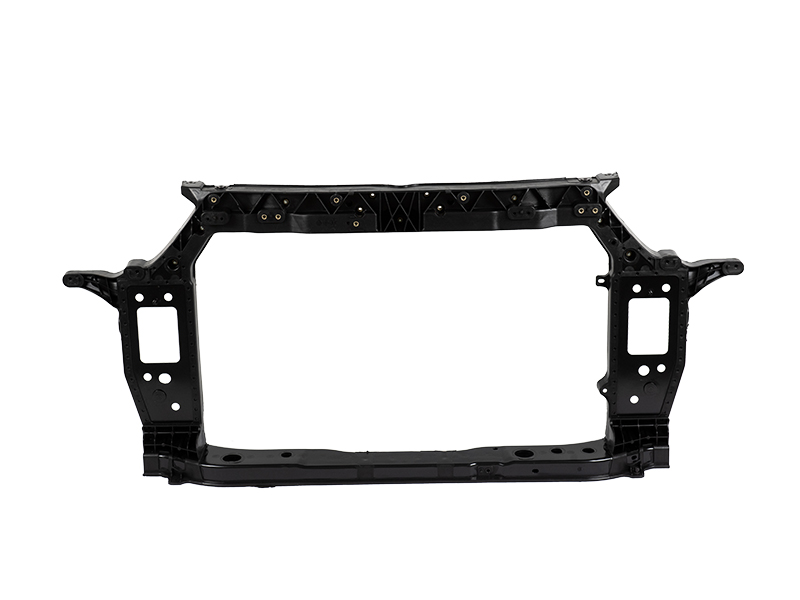
In the cooling system of a car, the Radiator Support is not only the core structure for fixing the radiator but also a crucial component that protects the cooling pipelines and engine compartment components from impacts. As the vehicle's service life increases or due to accident collisions, the support frame may become deformed, rusted, or broken, leading to the displacement of the radiator and even engine overheating. This article will take "How Long Does It Take to Replace a Radiator Support" as the core. Combining with the design features of common models such as the Hyundai i10 Radiator Support, it will systematically analyze the time range for replacing the radiator support and efficiency optimization strategies, from tool preparation, disassembly and installation to debugging and verification. This aims to help car owners and maintenance technicians efficiently plan this crucial maintenance task.


The Time Range and Influencing Factors for Replacing the Radiator Support

The total time for replacing the Radiator Support usually ranges from 3 to 5 hours, but the specific time is affected by the following factors:

Complexity of the Vehicle Model Design:

For compact vehicles (such as the Hyundai i10 Radiator Support), due to the narrow space in the engine compartment, it is necessary to remove the front bumper, air intake grille, or headlight assembly to expand the operation space, which increases the time consumption by about 1 hour.

For medium and large vehicles (such as SUVs or pickup trucks), they usually adopt a modular structure, and the support frame bolts are easier to reach, which can shorten the disassembly time.

Degree of Rust and Adhesion:

For vehicles that have been exposed to a humid environment for a long time, the bolts and the support frame may be adhered due to rust. It is necessary to spray lubricant and loosen them repeatedly, which extends the disassembly time by 0.5 to 1 hour.

Tools and Technician Experience:

Professional maintenance stations are equipped with tools such as hydraulic lifts and pneumatic wrenches, which can compress the total time to 2.5 hours; personal DIY operations may take twice as long due to tool limitations.

hyundai i10 radiator support

Standard Replacement Process and Step-by-step Time Analysis

Pre-treatment and Safety Preparation (20-30 minutes)

Disconnect the negative terminal of the battery to avoid the risk of circuit short circuits.

Drain the coolant and remove the upper and lower water pipes of the radiator (it is necessary to prepare a container in advance to recycle the liquid).

Lift the vehicle or use a jack to fix the front wheels to ensure the stability of the operation.

Disassemble the Old Radiator Support (1-2 hours)

Remove the Associated Components:

For the Hyundai i10 Radiator Support, the front bumper needs to be removed first (6-8 bolts, which takes 15 minutes).

For some models, the fan assembly or the air conditioning condenser needs to be removed to make room.

Loosen the Fixing Bolts:

Use a 14mm socket to loosen the connecting bolts between the support frame and the vehicle frame counterclockwise (usually 4-6 bolts). If there is rust, spray WD-40 and let it stand for 10 minutes before operating.

Install the New Support Frame (1-1.5 hours)

Cleaning and Calibration:

Make sure you scrub the surface of the vehicle frame installation area with a wire brush to remove any rust or remaining adhesive so the new support mounts flat.

Do a comparison of the new support frame to check whether the starting factory hole positions matches (to prevent installation deviation due to tolerances).

Bolt Fixing and Tightening Control:

Tighten the bolts in a diagonal order in two steps. The pre-tightening torque is 10-15N·m, and the final torque is adjusted according to the vehicle model specifications (25-30N·m for the Hyundai i10, for example).

Data Merge and Function Check (30-60 mins)

Reinstall the radiator, water pipes, and all the other implements, refill the coolant, and evacuate the bubbles in the pipelines.

Start the engine and watch for the rise of the water temperature, and check the radiator is stable or not, and there will not be no abnormal vibration and leakage.


Key Tips and Precautions for Shortening the Time Consumption

Tool Optimization:

Use a pneumatic impact wrench to remove rusted bolts, which can reduce the intensity and time of manual operation.

Equip with a laser level to calibrate the position of the support frame to avoid repeated adjustments.

Lubrication and Cleaning Pre-treatment:

Apply graphite lubricant to the thread of the bolts and the contact surface of the support frame to reduce the disassembly resistance.

Clean the oil stains and sand around the radiator in advance to reduce the interference factors during installation.

Vehicle Model Adaptation Strategy:

For compact models such as the Hyundai i10 Radiator Support, the installation sequence of the disassembled components can be marked first (such as taking photos for records) to speed up the reassembly efficiency.

Choose the original factory or high-precision aftermarket support frame to reduce the installation rework caused by size deviations.


Common Problems and Efficiency Improvement Solutions

The Project Duration is Extended Due to Bolt Breakage

Cause: Severe rust or violent disassembly.

Countermeasure: Use a broken wire extractor or a reverse drill bit, which increases the time consumption by about 40 minutes. It is recommended to prepare replacement bolts in advance.

The Radiator is Offset after the Support Frame is Installed

Cause: The hole positions are not aligned or the torque is uneven.

Countermeasure: Use a rubber mallet to fine-tune the position of the support frame and redistribute the torque to an even value.

Leakage in the Cooling System

Cause: The water pipe joint is not tightened or the sealing ring is aged.

Countermeasure: Check the elasticity of the sealing ring before installation and use a torque wrench to lock the joint according to the specifications (usually 8-12N·m).


Conclusion: Precise Planning Improves Maintenance Efficiency and Safety

The time consumption for replacing the Radiator Support depends on the vehicle model design, operation tools, and technician experience. However, through standardized processes, pre-treatment optimization, and precise tool selection, car owners can significantly shorten the maintenance cycle and reduce the risk of failures. Whether it is the Hyundai i10 Radiator Support or other models, understanding the time allocation and skills described in this article will help you efficiently complete this crucial maintenance task and ensure the long-term stable operation of the cooling system.

Related products