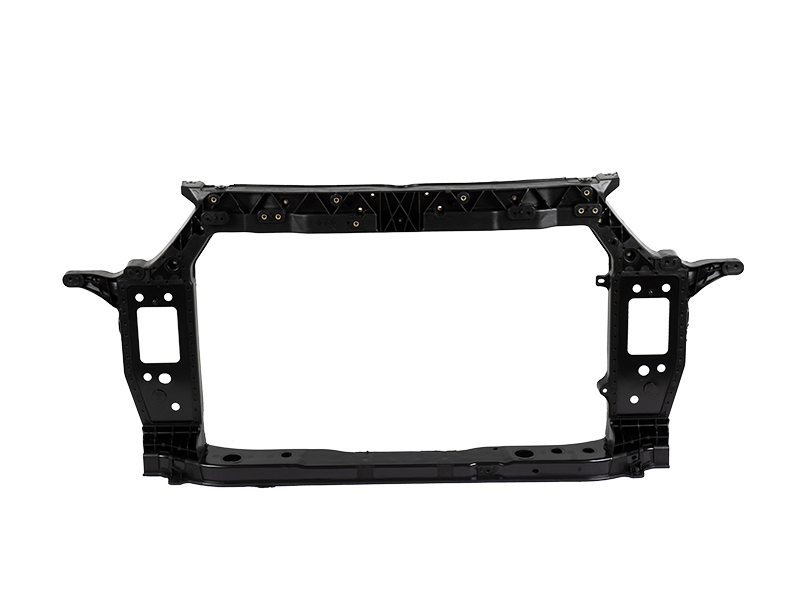
How Long Does It Take To Replace A Radiator Support?
 Apr 08, 2026|
 View:31
How long does it take to replace a radiator support? It is one of the first questions owners and repair shops ask when a front-end repair is on the table—and the answer is never a single number. The frame holds the cooling system in place and ties the front of the vehicle together, and replacement time depends on the vehicle model, the extent of damage, and who does the job. This guide breaks down typical time ranges, what drives them, and how owners can plan the repair realistically.
At a professional shop, a straightforward radiator support replacement typically takes a few hours, not a full day
Actual time depends on vehicle model, damage extent, and which surrounding parts must also be removed
Compact models such as the Hyundai i10 are usually quicker to service than large SUVs or trucks
Severe collision damage adds time because fenders, bumper, fans, and the condenser may need attention
DIY replacement takes longer than shop work and carries risk without the right tools and space
Ordering the correct part in advance is the single biggest way to shorten total downtime
Key Takeaways
At a professional workshop, replacing a radiator support usually takes about 2–5 hours for an average car, with variations by model and shop workload.
Larger vehicles and severe damage can push the job toward a full day or more because more parts come off.
The main time drivers are model complexity, collision damage extent, and whether the shop must order parts.
Compact models like the Hyundai i10 are on the faster end because access is simpler and the frame is smaller.
The job follows a clear sequence: remove front panels, disconnect cooling parts, unbolt the old frame, fit the new one, and align the hood and bumper.
A part that matches the original geometry, such as the Hyundai i10 application with OEM number 64101-B4000, saves fitting and adjustment time.
DIY replacement generally takes longer and needs lifting equipment, correct tools, and alignment experience.
Owners can cut total downtime by confirming the exact model, year, and engine, and ordering the part before booking the repair.
How Long Does a Radiator Support Replacement Take?
At a professional repair shop, replacing the front-end frame of a typical passenger car usually takes about 2 to 5 hours of workshop time. This is a general range, not a fixed rule: compact cars sit at the faster end, while SUVs, pickups, and commercial vehicles can take longer because the cooling stack is bigger and more panels must be removed.
The time estimate usually refers to the actual labor on the vehicle. Total time in the shop—from drop-off to pickup—can be longer because of inspection, waiting for parts, and alignment checks. Owners should always ask whether a quoted time includes the full job or only the part swap.
| Job Type | Typical Workshop Time | What It Depends On |
|---|---|---|
| Compact car, minor damage | About 2–3 hours | Simple access, few panels removed |
| Mid-size sedan, moderate damage | About 3–5 hours | More mounting points, alignment needed |
| SUV, pickup, or truck | 5 hours or more | Larger frame, more cooling components |
| Severe collision damage | 6–8 hours or a full day | Bumper, fenders, fans, condenser involved |
| DIY (home garage) | Often a full day or weekend | Tools, lifting, experience, and rework |
Note: Time figures above are general industry-style estimates for planning, not promises for any specific vehicle. Labor times vary by shop equipment, technician skill, and local practices.
What Determines How Long the Job Takes
Several factors move the actual replacement time up or down. Understanding them helps owners judge whether a quoted estimate is realistic.
Vehicle Model and Access
Every model packages its front end differently. A compact hatchback has fewer bolts and simpler brackets, so the old frame comes out quickly. A large SUV may require removing the bumper cover, grille, headlights, intercooler piping, and part of the wheel arch liner just to reach the mounting bolts. The more layers, the longer the job.
Damage Extent
A clean frame swap—where only the frame itself is damaged—is the fastest case. After a front-end collision, the bumper, fenders, hood, fans, and condenser may also need straightening or replacement. Each additional part adds inspection time, removal time, and often new parts to order.
Parts Availability
If the correct front-end frame is already in stock, the shop can start work immediately. If it must be ordered, the wait can range from a day to several weeks depending on the supplier's stock and shipping distance. This is often the largest component of total downtime, separate from the labor itself.
Shop Workload and Equipment
A busy shop may schedule the job days ahead. Proper equipment—a lift, the right sockets, and alignment fixtures—reduces labor time, while a shop doing the job on a flat floor without a lift will be slower. Asking about current scheduling is part of getting an accurate answer to "how long".
The Step-by-Step Replacement Process
Knowing the sequence explains the time. A typical professional job follows these stages:
| Step | Work Involved | Typical Share of Time |
|---|---|---|
| 1. Preparation and inspection | Raise the vehicle, confirm damage, order or pick parts | Short, unless parts must be ordered |
| 2. Removing front panels | Bumper cover, grille, headlights, and fender edges | Moderate; more panels means more time |
| 3. Disconnecting cooling parts | Radiator hoses, fan shroud, and condenser brackets | Short; careful work protects parts |
| 4. Unbolting the old frame | Remove mounting bolts and any spot-welded brackets | Short when bolts are clean, longer when rusted |
| 5. Fitting the new front-end frame | Position, bolt, and transfer rubber mounts and brackets | Main share; fitment quality matters |
| 6. Refitting and alignment | Reinstall panels, align hood and bumper, test cooling | Important; misalignment adds rework |

Steps 2 and 5 dominate the clock. A part that matches the original hole positions—so no drilling, cutting, or shimming is needed—keeps step 5 short. That is one reason model-matched frames are preferred over universal blanks.
Minor Damage vs. Severe Collision Damage
Many front-end frame replacements happen after front-end impacts, and the damage category changes the time estimate significantly.
Minor damage: A light front hit bends the frame but leaves the bumper and cooling parts usable. The shop removes the bumper, swaps the frame, and refits. Typical workshop time: about 2–4 hours for a normal car.
Severe damage: A stronger impact also damages the bumper reinforcement, condenser, fans, hood, or fenders. Each damaged part is inspected, replaced or repaired, and realigned. The job becomes a small front-end rebuild, and six to eight hours or a full day is realistic. After any front impact, the frame should be inspected even if the bumper "looks fine"; structural integrity is not something that can be judged by eye alone. Frontal crash behavior of front structures is a central concern of vehicle safety regulation, and national authorities such as NHTSA set the crash-test requirements that guide how these parts must perform.
The Hyundai i10: A Compact-Car Example
Typical Time by Vehicle Category
Workshop time scales with vehicle size and front-end packaging. The table below gives a general planning view; real jobs vary because damage and shop conditions differ.
| Vehicle Category | Typical Workshop Time | Why |
|---|---|---|
| City car / compact hatchback (e.g., Hyundai i10) | About 2–3 hours | Small frame, simple brackets, easy access |
| Mid-size sedan | About 3–4 hours | More mounting points, more panels |
| Compact SUV / crossover | About 4–5 hours | Taller front end, additional trim layers |
| Full-size SUV / pickup | 5–7 hours | Large cooling stack, heavy steel frame |
| Commercial truck | Often a full day | Bulkier parts, specialized tools |
These figures describe the swap itself at a professional shop. If the estimate you receive is much higher, the extra time usually comes from additional damaged parts or parts ordering, not from the frame work alone.
Why the Hyundai i10 Example Is So Common
The Hyundai i10 is sold across Europe, Asia, and other regions in large volumes, and the Xcent is its sedan variant in some markets. Front-end collisions involving these models are frequent in city traffic, so this application is one of the most requested replacement parts among compact cars. Repair shops know the application well, which shortens diagnosis and sourcing time.
The 2014–2016 generation uses a plastic-and-steel composite front-end frame. In practice, this structure has two time-related advantages during replacement: the plastic sections are lighter and easier to handle than an all-steel frame, and the part is molded to the original hole positions, so the technician does not need to force, shim, or re-drill anything. Less fitting effort means less labor time—another reason the job stays at the faster end of the range.
Parts that follow the original data also avoid the "almost fits" problem, where a generic panel needs trimming and produces misalignment that costs another hour of adjustment. Related guidance: symptoms of a faulty Hyundai Xcent radiator support.
Rust, Bolts, and Hidden Surprises
Real workshop time is also decided by condition, not only by design. In regions that use road salt, the bolts holding the front-end frame can corrode, and a rusted bolt may need heat, penetrating oil, or careful extraction. One stubborn bolt can add half an hour; several add up quickly. Older vehicles often have brittle plastic clips that break during panel removal and must be replaced. A technician who has worked on the same model before knows where these clips are and keeps spares, which keeps the job on schedule.
Owners can help by mentioning previous front-end repairs, accident history, or known rust problems when booking. That information lets the shop plan extra time and parts in advance instead of discovering them halfway through.
A Realistic Timeline from Start to Finish
Looking at the whole process—not only the hours on the lift—gives the truest answer to "how long":
Day 0–1: Diagnosis and quote. The shop inspects the vehicle and confirms which parts are needed.
Day 1–5 (or more): Parts sourcing. If the correct frame is in stock locally, this step is hours; if it is ordered, the wait depends on supplier stock and shipping.
Day of repair: The swap itself, typically 2–5 hours as described.
After the job: Alignment check and test drive, usually part of the same visit.
Suppliers that keep common applications in stock—for example, the Hyundai i10—turn the sourcing step into a short one. That is why buyers and shops often ask about stock before asking about price.
Materials and Fit: How Construction Affects Time
The construction of the replacement part influences how quickly it can be installed. All-steel frames are strong but heavy and rigid; they fit precisely only when their stamping matches the original tooling. Composite plastic-and-steel designs, increasingly common in compact cars, are lighter, resist corrosion in humid or salted environments, and can be manufactured with tight tolerances that mirror the original part. For the technician, a part that drops into place saves the time that cutting, bending, or shimming would otherwise take.
Anti-corrosion coating matters beyond fitting: a coated frame resists the rust that later makes removal slow. Electrophoretic coating (e-coat) is a common protection method, and coating performance is assessed with standardized test methods published by ASTM International.
Compact cars are the faster end of the range, and the Hyundai i10 is a typical example. The vehicle's small front end means fewer panels and a smaller frame, so this replacement at a professional shop commonly fits within the 2–4 hour band—before any waiting for parts.
For the 2014–2016 Hyundai i10 and Xcent, this front-end frame carries OEM number 64101-B4000. Many aftermarket parts for this application use a plastic-and-steel composite structure: the plastic sections absorb high-frequency vibration in the engine bay, while the steel frame provides stable mounting. Because the part is designed from the vehicle's original data, hole positions match without adjustment, which directly shortens fitting time.

DIY vs. Professional Replacement
Owners sometimes consider replacing the front-end frame at home to save money. It is possible, but the time comparison is not flattering to DIY.
DIY: Without a lift, the owner works under the car on jack stands. Removing the bumper and panels by hand is slower, rusted bolts take extra effort, and alignment of the hood and bumper is hard to do well without a second person and measuring tools. A job that takes a shop a few hours can easily take a home mechanic a full day—and any fitting error means rework. Related guidance is available in how to tell if your radiator support is bad before deciding whether replacement is even needed.
Professional shop: Shops have lifts, proper sockets, and experience with front-end alignment. The labor cost is higher, but the job is done once, with warranty and correct alignment. For a structural part that affects cooling and crash performance, most owners accept the professional route.
How to Shorten the Total Time
The clock that matters to most owners is total downtime—from deciding to repair to driving away. It can be shortened in practical ways:
Confirm the exact part first: model, year, engine, and OEM cross-reference number. Wrong parts cause the longest delays.
Order before booking: if the shop does not stock the part, order it in advance and have it ready when the vehicle arrives.
Ask about stock: suppliers that keep common models in stock, such as the Hyundai i10 application, can ship quickly. Symptoms of a faulty Hyundai Xcent radiator support help confirm the diagnosis before ordering.
Book a shop with a lift: equipment reduces labor time and avoids a second visit for alignment.
Bundle the repair: if the condenser or fans also need work, doing it in the same visit avoids repeated disassembly.
Owners who want background before starting can read is a radiator support necessary, what a radiator support does, and the impact of a damaged 71410-TBA-A01 radiator support on engine cooling.
What to Ask Before You Book the Repair
A few questions turn an estimate into a reliable plan. Owners should ask the shop for a written breakdown that separates the part, the labor, and any additional items such as clips, mounts, or coolant. It is also worth asking whether the quoted time includes panel refitting and alignment, or only the frame swap, and whether the shop has done the same model before. Shops familiar with an application work faster because they know the clip positions and bolt sizes.
When the vehicle will be off the road, owners should confirm the total timeline including parts sourcing. If the shop does not stock the correct frame, ask whether the supplier can ship quickly and what the realistic lead time is. A supplier that keeps standing stock of common models shortens this step considerably.
Warranty and Quality Considerations
The time spent on a replacement is wasted if the part fails early, so quality checks belong in the planning conversation. Buyers should ask about the manufacturer's quality system, batch sampling, and warranty terms. According to DINGHAO, its radiator supports are produced under ISO/TS16949-aligned management, each batch is sampled before shipment, production is traceable, and quality assurance is provided within 90 days after the customer receives the product. These details matter most to repair shops that buy in volume, because a bad batch means repeat labor on the same vehicle.
For individual owners, the practical check is simpler: confirm the part is the correct application, inspect the coating and welds on arrival, and keep the packaging and paperwork in case of a claim.
The Role of Documentation in a Smooth Replacement
Paperwork speeds up both diagnosis and ordering. The vehicle identification number (VIN) identifies the exact year, engine, and trim, and eliminates guesswork about which frame fits. The OEM cross-reference number on the old part—or in the vehicle parts catalog—points directly to the correct replacement. Repair shops that supply these details to a parts vendor get accurate quotes in one round instead of several.
Model lists and dimensional drawings from the supplier also help: a buyer comparing several front-end frames can check hole positions and bracket layout before paying, avoiding the return-and-reorder cycle that costs days. Knowing the damage signs before ordering avoids replacing a part that could be repaired.
What Happens After the Replacement
The job is not finished when the last bolt is tight. A professional replacement ends with a coolant level check, a test of the cooling fans, and a short test drive to confirm that the hood, bumper, and headlights sit correctly and that nothing rattles. If the repair followed a collision, the shop may also verify that the front wheels and steering alignment were not affected, because a bent front structure can shift those settings.
Owners should drive the vehicle gently for the first days and watch for three things: coolant leaks at the new joints, unusual noise from the front end, and any change in hood or bumper alignment. Small adjustments right after installation are normal and cheap to fix; problems that appear weeks later usually point to a fitting error or a damaged neighboring part that was missed.
Labor Rates and Regional Differences
Workshop time is quoted in hours, but the hourly rate varies widely between regions and shop types. Independent shops, dealer service departments, and specialized body shops all price labor differently, and urban areas generally charge more than rural ones. The same 3-hour job can therefore produce very different invoices in different cities. Comparing quotes should focus on total price with the same parts list, not on the hourly figure alone.
For buyers purchasing parts directly, the labor comparison matters in another way: a part that needs no adjustment saves paid hours regardless of the local rate, which is why fitment quality is worth a slightly higher part price.
Conclusion
How long a radiator support replacement takes has no universal answer, but a realistic planning range is 2–5 hours of workshop time for an average car, with compact models like the Hyundai i10 at the faster end and large or heavily damaged vehicles at the slower end. The factors that matter most are vehicle access, damage extent, parts availability, and who performs the job. Labor time is only part of the story; parts lead time often dominates total downtime.
Owners can keep the repair predictable by confirming the exact vehicle and part number, ordering in advance, and choosing a shop with proper equipment. Related reading: how important a radiator support is.
Need a Reliable Radiator Support Manufacturer?
Changzhou Dinghao Auto Parts Co., Ltd. (founded 2007, Changzhou, China) specializes in radiator supports, reinforcements, and mounting brackets for automotive body repair, including the Hyundai i10/Xcent radiator support (OEM 64101-B4000). According to the company, it operates a 143,500+ sq ft production base, holds ISO/TS16949 certification, keeps common models in standing stock, and supports customers in 30+ countries and regions. Buyers can confirm fitment, request drawings, or order samples before the first shipment. Quality-management certification follows international standards such as ISO/TS 16949, and coating and material performance is commonly verified with test methods published by ASTM International.
Send an Inquiry to DINGHAOView the Radiator Support →FAQ
At a professional shop, typically about 2–5 hours for an average passenger car, depending on model, damage extent, and shop workload. Severe damage or large vehicles can take a full day. This is a general estimate, not a fixed number.
It is possible with the right tools and space, but DIY usually takes a full day or weekend, and hood and bumper alignment is difficult without experience. Most owners choose a professional shop for structural parts.
As a compact car, the Hyundai i10 is on the faster end—commonly about 2–4 hours of workshop time for the part swap itself, plus any waiting for parts. Exact time varies by shop and damage.
For the 2014–2016 Hyundai i10/Xcent, this front-end frame carries OEM number 64101-B4000. Confirm model, year, and engine before ordering.
Because the bumper, fenders, fans, and condenser may also be damaged and must be inspected, repaired, or replaced. The job becomes a small front-end rebuild, so it can take 6–8 hours or more.
Cost combines the part, labor, and any additional damaged parts. Labor is often the larger share. Ask for a line-item quote with model-specific part numbers before agreeing.
Most repair standards specify replacement for deformed structural parts, because straightening can weaken the metal and reduce future crash performance. Minor surface rust may be treated; deformation means replacement.
Confirm the exact model, year, and OEM part number, and order the part before booking the repair. Suppliers with standing stock of common models can ship quickly.
References and Image Credits
National Highway Traffic Safety Administration (NHTSA) — vehicle crash testing and safety standards: https://www.nhtsa.gov/
ASTM International — sheet metal and coating test standards for automotive body parts: https://www.astm.org/
International Organization for Standardization (ISO) — ISO/TS 16949 and quality management standards: https://www.iso.org/
Image — DINGHAO (https://www.dinghaoautoparts.com/Product/HN-i10-14-16-R-SUPPORT.html)
Notes: time ranges are general planning estimates for typical workshops and vary by vehicle, damage, equipment, and local practice; company capabilities (founded 2007, 143,500+ sq ft base, ISO/TS16949, 30+ countries, standing stock) are stated according to the company; OEM number 64101-B4000 is listed on the manufacturer's product page.