












How To Install Radiator Support Bushings?
 Mar 10, 2025|
 View:1653
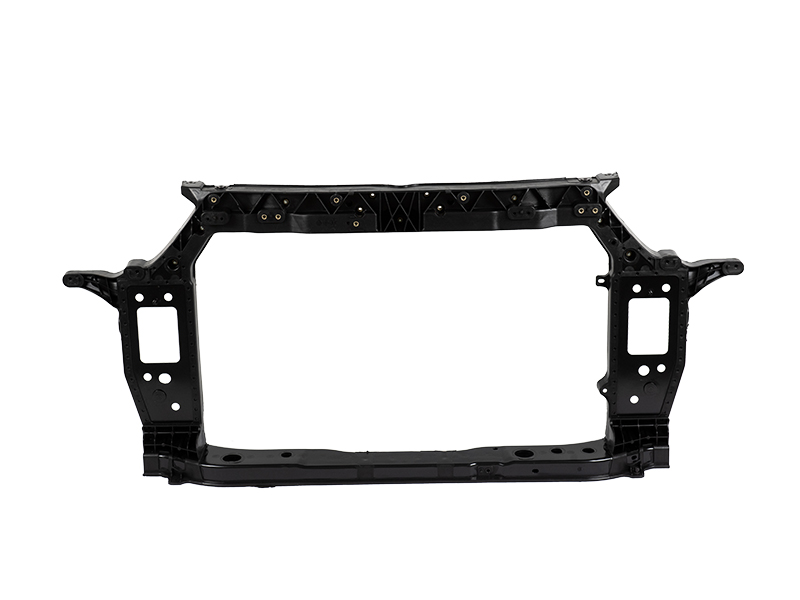
With the increase in the service life of a car, the rubber bushings of the radiator support system will age and crack due to long-term exposure to engine vibrations, temperature changes, and road impacts. This phenomenon can lead to the displacement of the radiator, pipeline leakage, and even the risk of engine overheating. This article will take "How to Install Radiator Support Bushings" as the core, systematically explain the replacement process of the radiator support bushings, and provide comprehensive guidance from tool preparation to installation and adjustment in combination with the design features of common models such as the Hyundai i10 Radiator Support. It aims to help car owners and maintenance technicians efficiently complete this crucial maintenance task.
The Function and Replacement Necessity of Radiator Support Bushings
The radiator support bushings are the core buffer components connecting the radiator and the vehicle frame, and their functions include:
Vibration and Noise Reduction: Absorb engine vibrations and road bumps through the elasticity of the rubber, preventing abnormal noises caused by direct friction of metal parts.
Precise Positioning: Ensure that the distance between the radiator, the fan, and other components in the engine compartment remains constant, and prevent the coolant pipeline from being damaged due to displacement.
Life Extension: Aging and cracked bushings will lead to metal fatigue of the radiator bracket. Replacing with new bushings can avoid associated maintenance costs (such as sheet metal repair).
Taking the Hyundai i10 Radiator Support as an example, its bushing design adopts a dual-hardness rubber layer structure. The outer layer is resistant to ultraviolet rays, and the inner layer is resistant to oil stains. However, after long-term use, the rubber will harden and lose its elasticity, so it needs to be regularly inspected and replaced.

Preparatory Work before Installation
Tool List
Basic Tools: Socket wrenches (10mm-14mm), torque wrench, crowbar, lubricants (silicone-based or graphite powder).
Special Tools: Bushing press-in tool (suitable for different hole diameters), radiator support fixing frame (to prevent the radiator from tilting during disassembly).
Safety Equipment: Goggles, cut-resistant gloves.
Vehicle Pre-treatment
Disconnect the negative terminal of the battery to avoid the risk of short circuits.
Wait for the engine to cool down to room temperature (to prevent scalding).
Lift the vehicle or use a jack to fix the front wheels to ensure the operation space.
Detailed Steps for Removing the Old Bushings
Locate the Radiator Support Structure
Open the engine compartment and find the metal brackets connecting the two sides of the radiator and the vehicle frame (usually there are 4-6 fixing points).
In compact models such as the Hyundai i10 Radiator Support, it may be necessary to remove the front bumper or the air intake grille first to expand the operation space.
Remove the Fixing Bolts and Old Bushings
Use a socket wrench to loosen the bushing fixing bolts counterclockwise (pay attention to keeping the washers).
If the bushing is rusted and adhered to the bracket, spray WD-40 lubricant and let it stand for 10 minutes, and then slowly pry it out with a crowbar.
Avoid hitting it forcefully to prevent the radiator bracket from deforming.
The Correct Method for Installing New Bushings
Cleaning and Inspection
Use a wire brush to remove the rust and rubber residues in the mounting holes of the bracket to ensure a flat contact surface.
Compare the new bushing with the original factory dimensions (inner diameter, outer diameter, thickness) to avoid looseness after installation due to an incorrect model.
Lubrication and Press-in
Apply lubricant evenly on the outer surface of the bushing to reduce friction resistance.
Align the bushing with the mounting hole and use a special press-in tool to apply pressure vertically (as shown in Figure 1). When installing manually, you can tap the edge lightly with a rubber mallet to ensure that the bushing is fully embedded and there is no tilt.
Bolt Tightening and Torque Calibration
Insert the fixing bolts again and tighten them in a diagonal order in two steps (first pre-tighten to 50% of the torque, and then increase it to 100% according to the manufacturer's specifications).
The typical torque value for the Hyundai i10 Radiator Support is 25-30N·m. Over-tightening will squeeze the rubber and cause premature aging.
Inspection and Precautions after Installation
Functional Verification
Shake the radiator manually to confirm that there is no obvious shaking (the displacement should be less than 2mm).
Start the engine and observe the vibration amplitude of the radiator at idle speed. If there is abnormal resonance, the position of the bushing needs to be recalibrated.
Regular Maintenance Suggestions
Inspect the condition of the bushings every 2 years or after driving 50,000 kilometers, especially pay attention to whether the rubber surface shows cracks or hardening.
After driving through water or working in a high-temperature environment, clean the sand and oil stains around the bushings in a timely manner to extend their service life.
Common Problems and Solutions
The Bushing Cannot Be Pressed into the Mounting Hole
Possible Reason: There are burrs remaining in the hole diameter or insufficient lubrication.
Countermeasure: Sand the hole wall with sandpaper and increase the amount of lubricant.
The Radiator is Offset after Installation
Possible Reason: The bushing is not pressed in completely vertically or the bolt torque is uneven.
Countermeasure: Use a laser level to calibrate the position of the bracket and redistribute the torque.
Conclusion: Key Operations to Improve the Reliability of the Cooling System
Correctly installing Radiator Support Bushings can not only restore the stability of the radiator but also avoid chain failures caused by component displacement. Through the selection of standardized tools, precise torque control, and regular maintenance, car owners can significantly reduce maintenance costs and extend the engine's service life. Whether it is the Hyundai i10 Radiator Support or other models, following the scientific procedures provided in this article can ensure the efficiency and safety of the bushing replacement operation.